Natural Born Table
AHEC
This project is a manifesto to draw attention to ongoing climate change. We want to show that in times of climate crisis we have to revise our production processes and redefine standards for both industry and consumer expectations.
By modifying the subsequent stages of furniture formation, we move the border between the material and product, tree and table.
The red oak table is a CO2 storage
The starting point for us was the knowledge that 1 m³ of wood stores a ton of carbon dioxide. The longer we keep it in this form, the better for the planet.
Using the entire trunk thanks to the dedicated cutting diagram
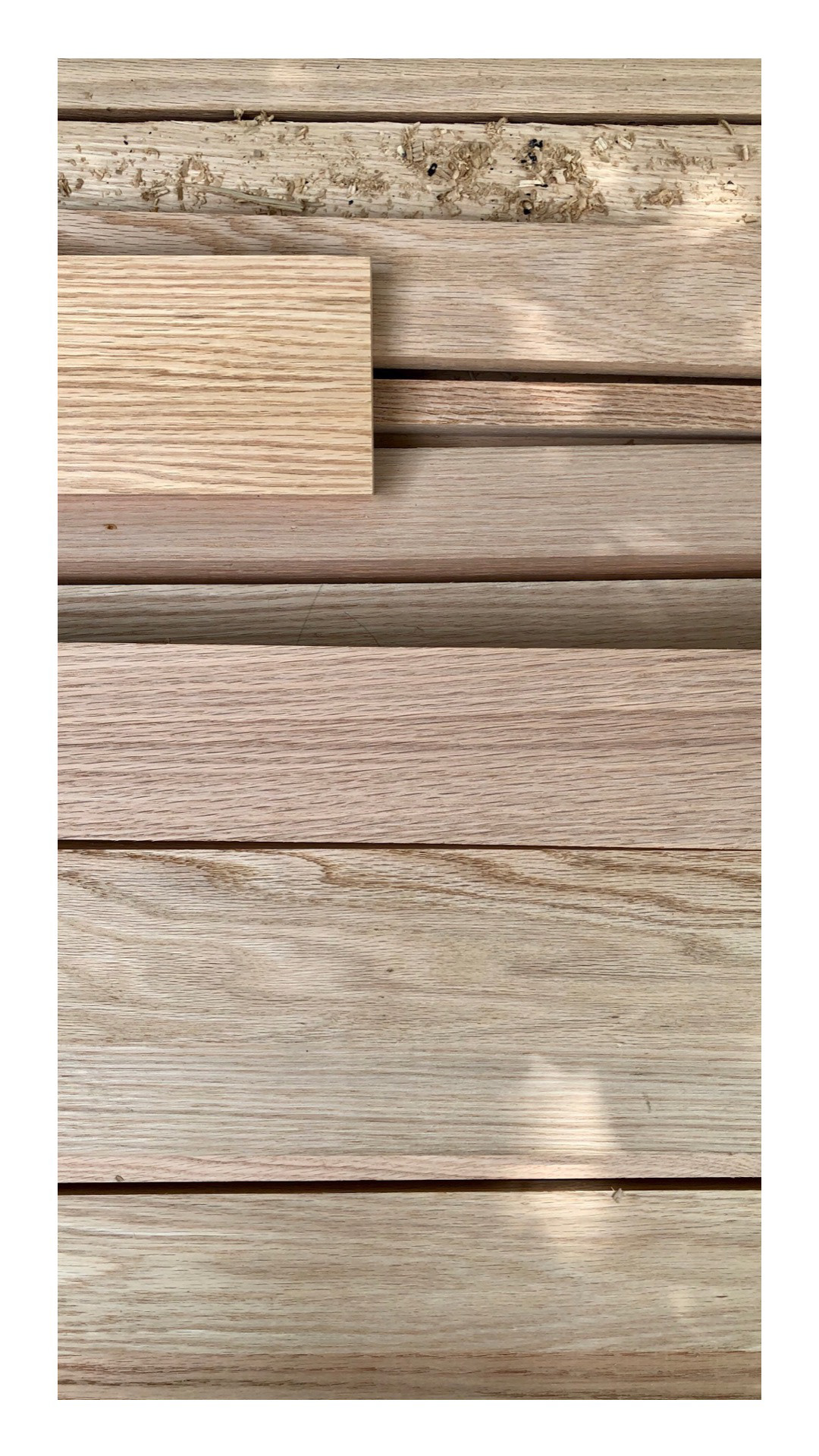
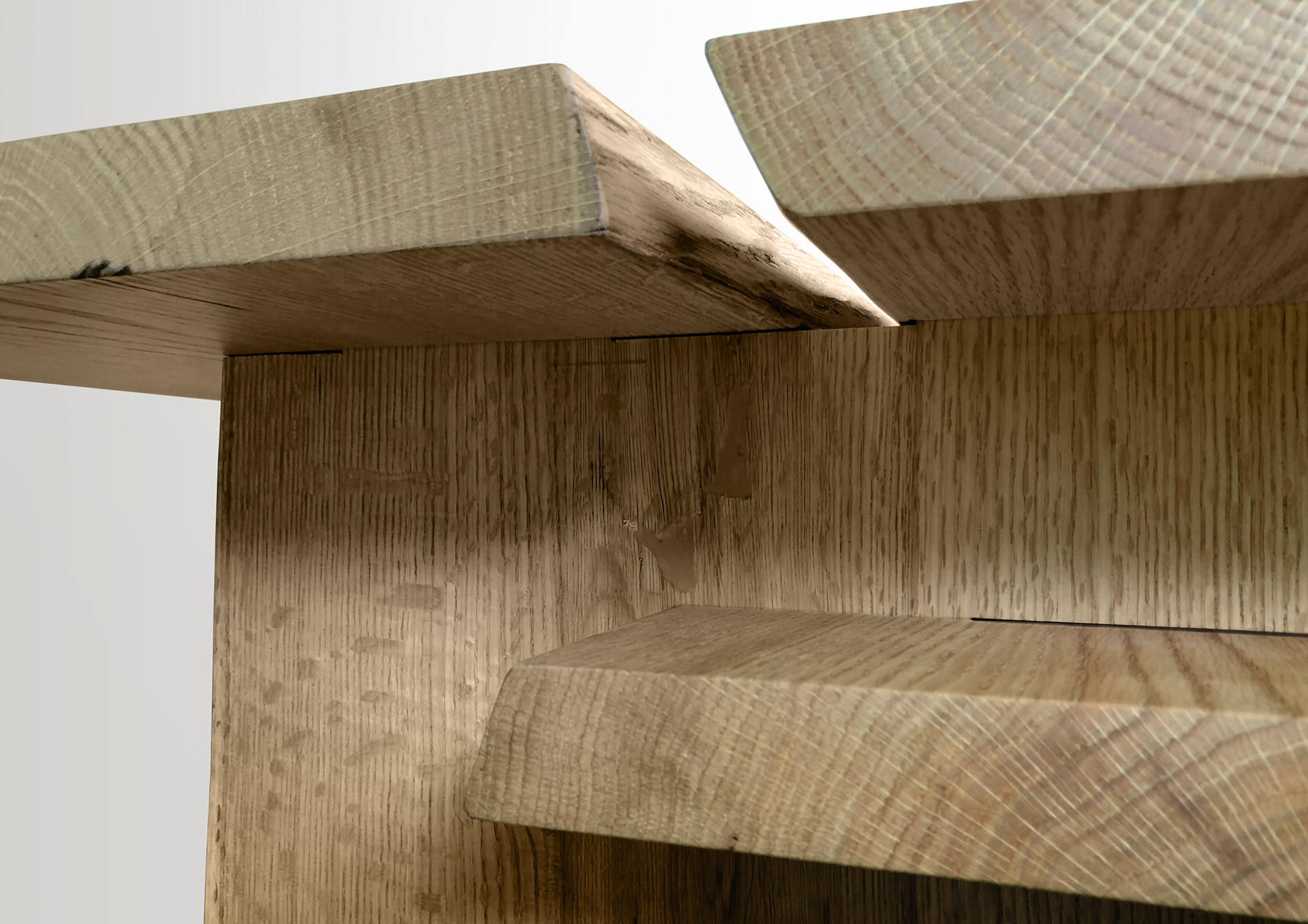
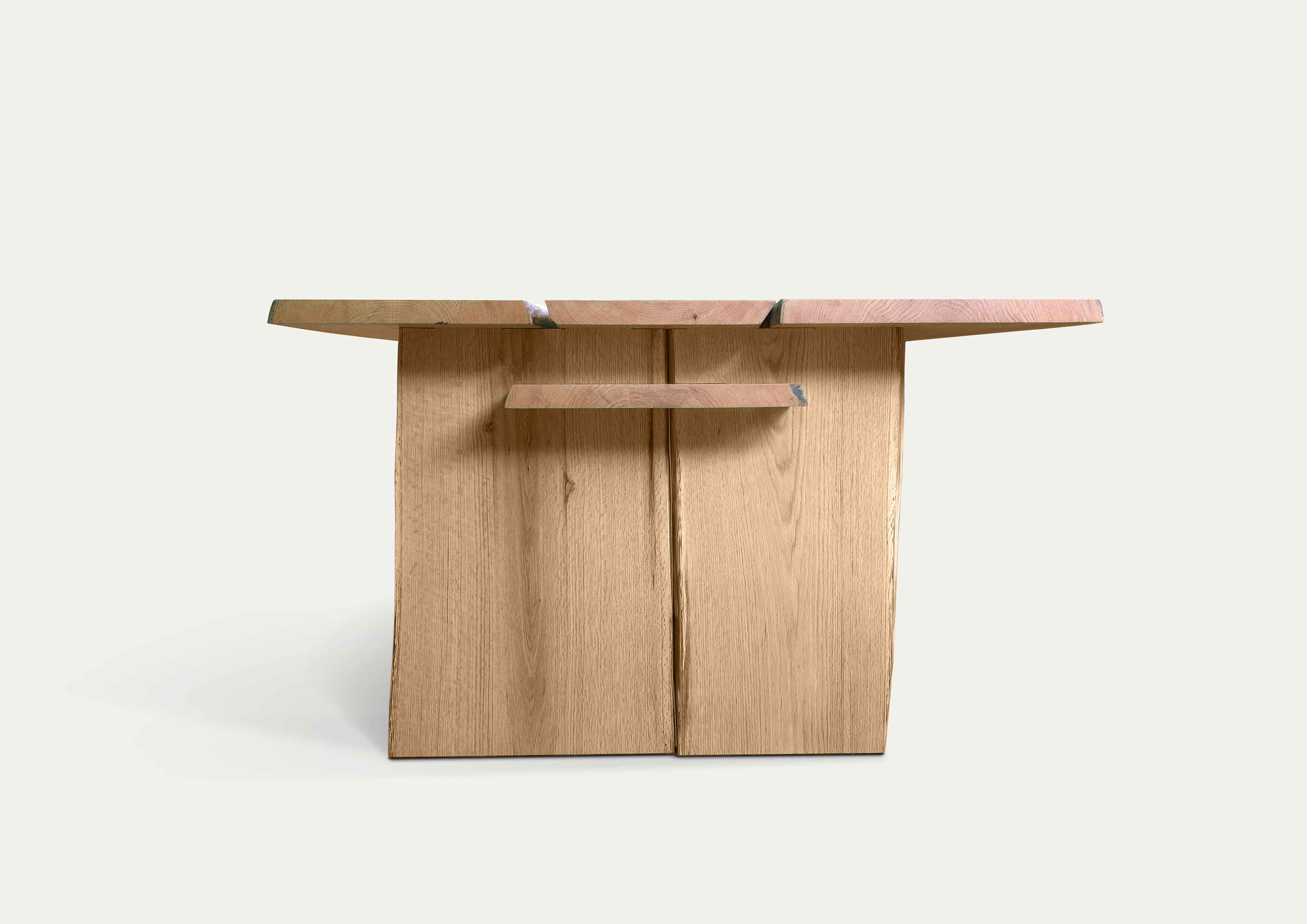
The new cut creates the target parts of the furniture. The form of the tree directly defines the shape of the furniture, and the waste is reduced to a minimum. We do not align the edges of the timber.
Greenwood
Drying wood is responsible for up to 86% of the energy used in the wood production process (Maureen E. Puettmann, James B. Wilson, 2005). The use of greenwood or wood dried only in the open-air significantly affects the final impact of the product.
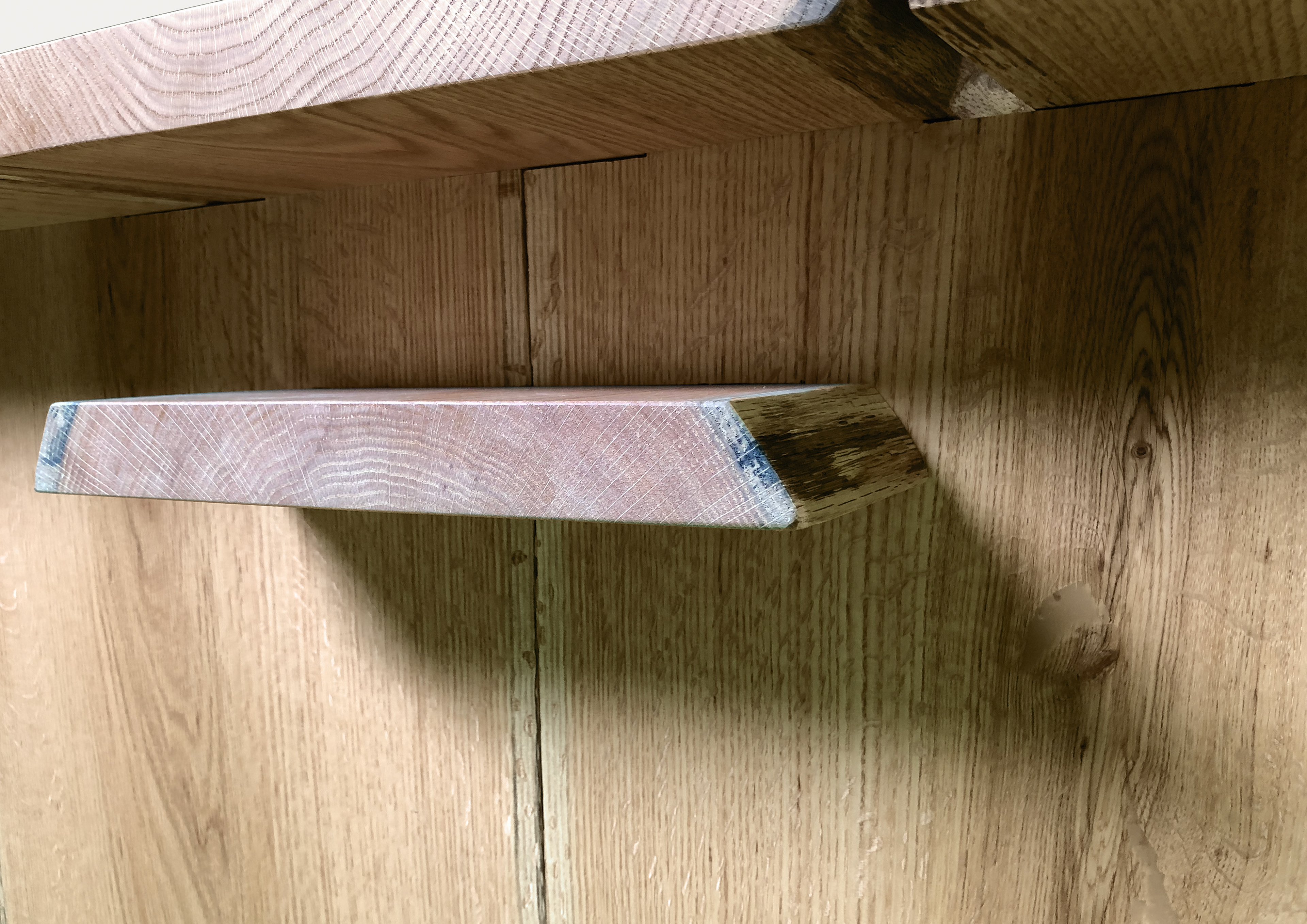
Simplified Design
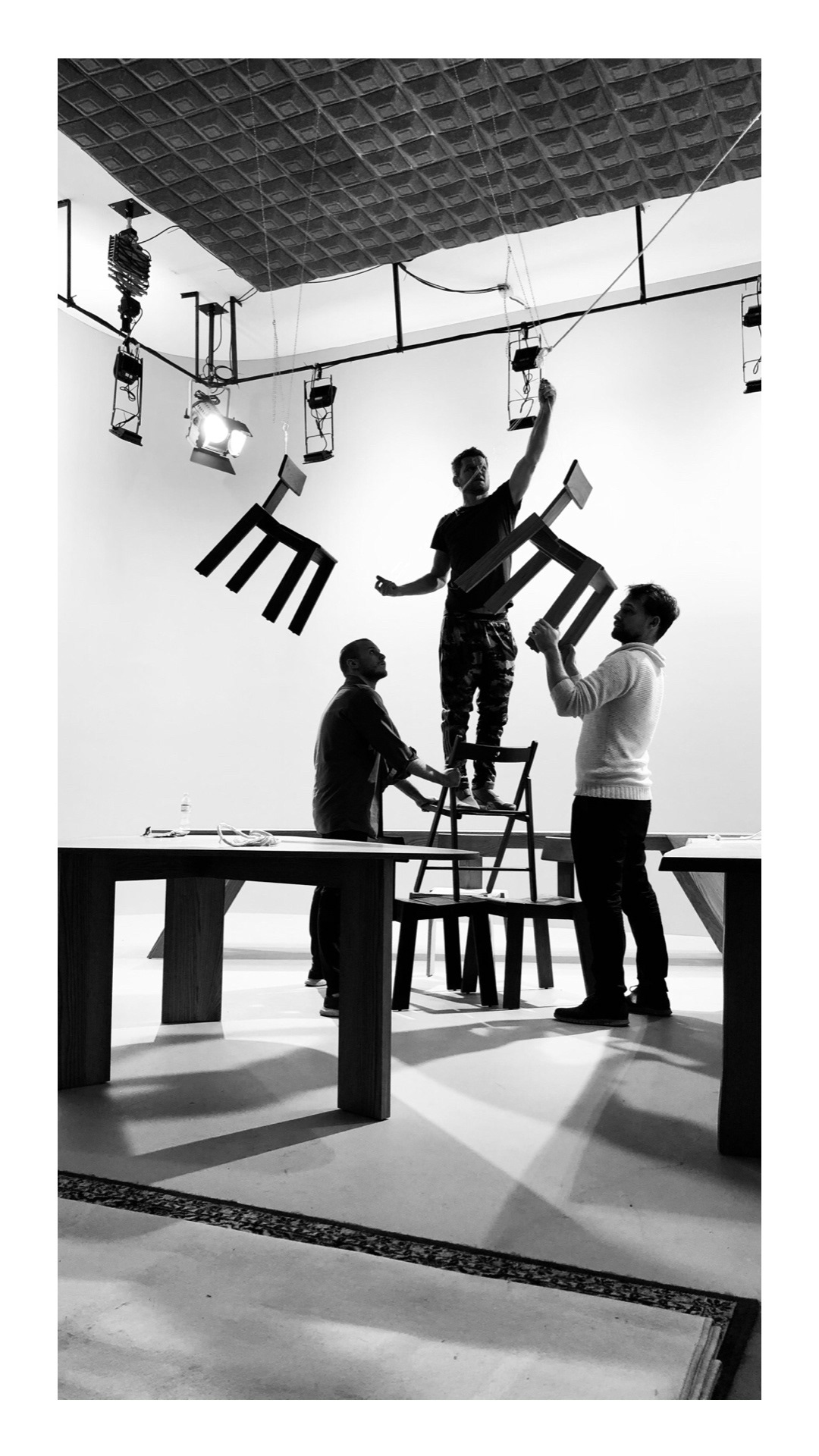
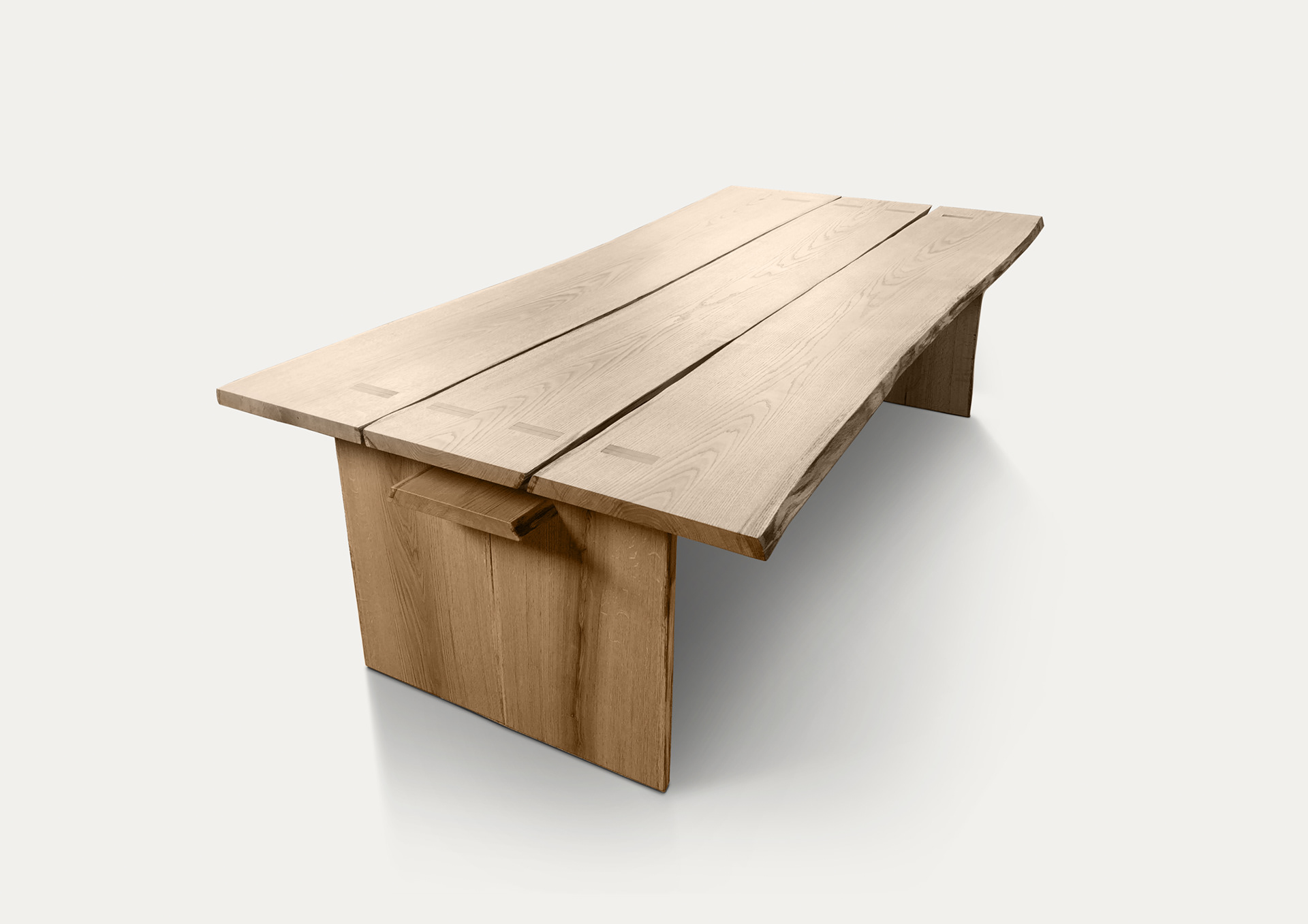
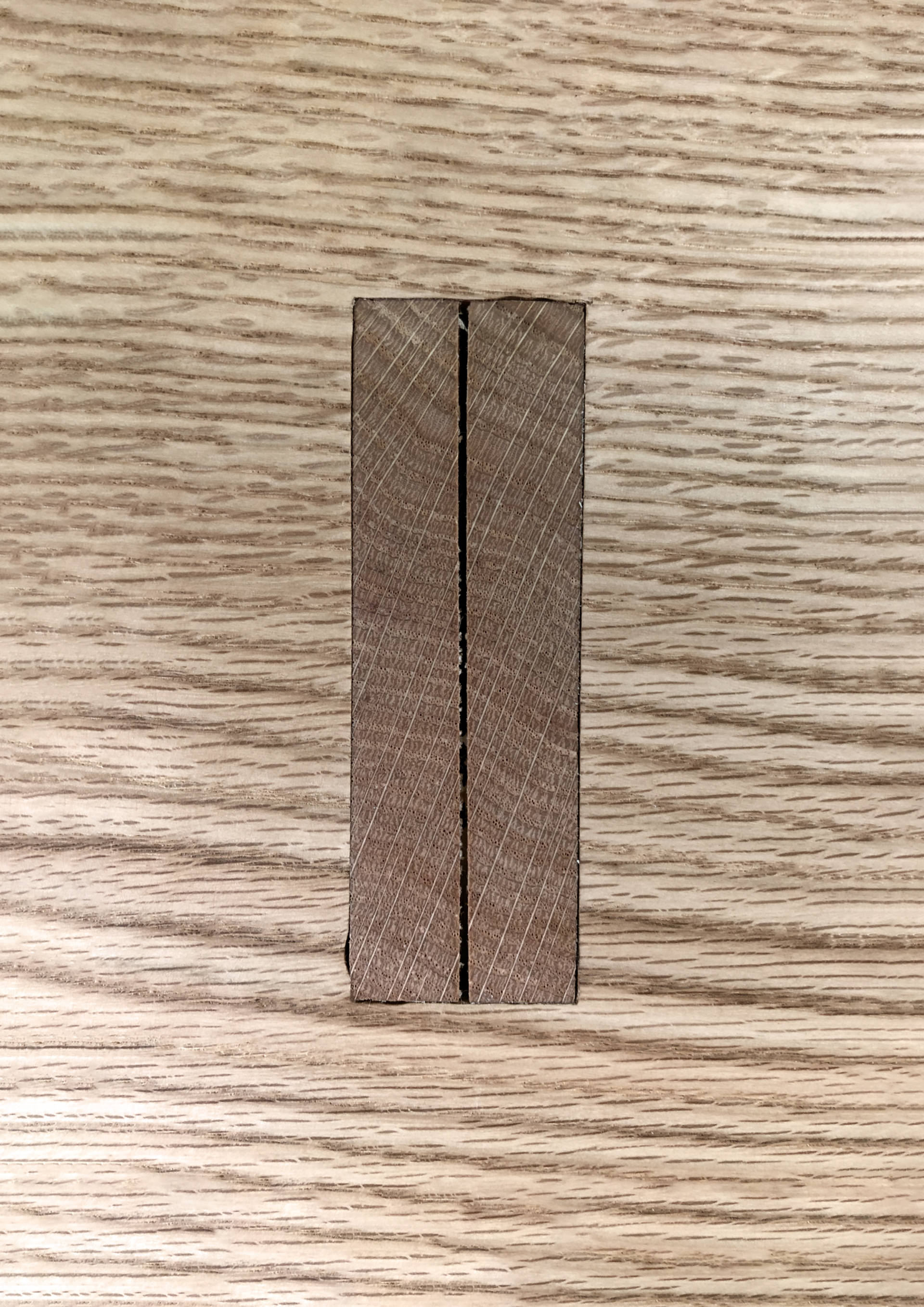
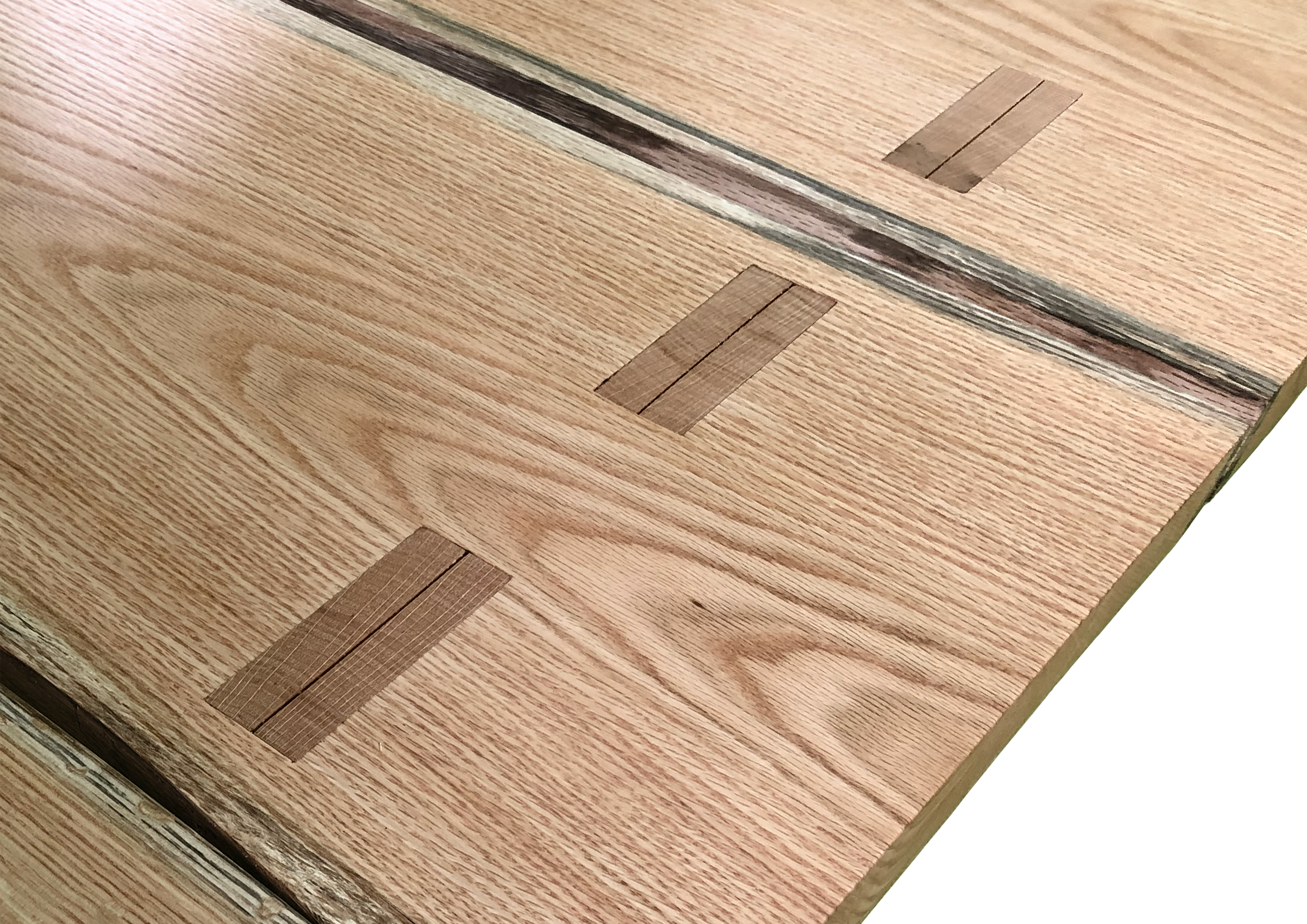
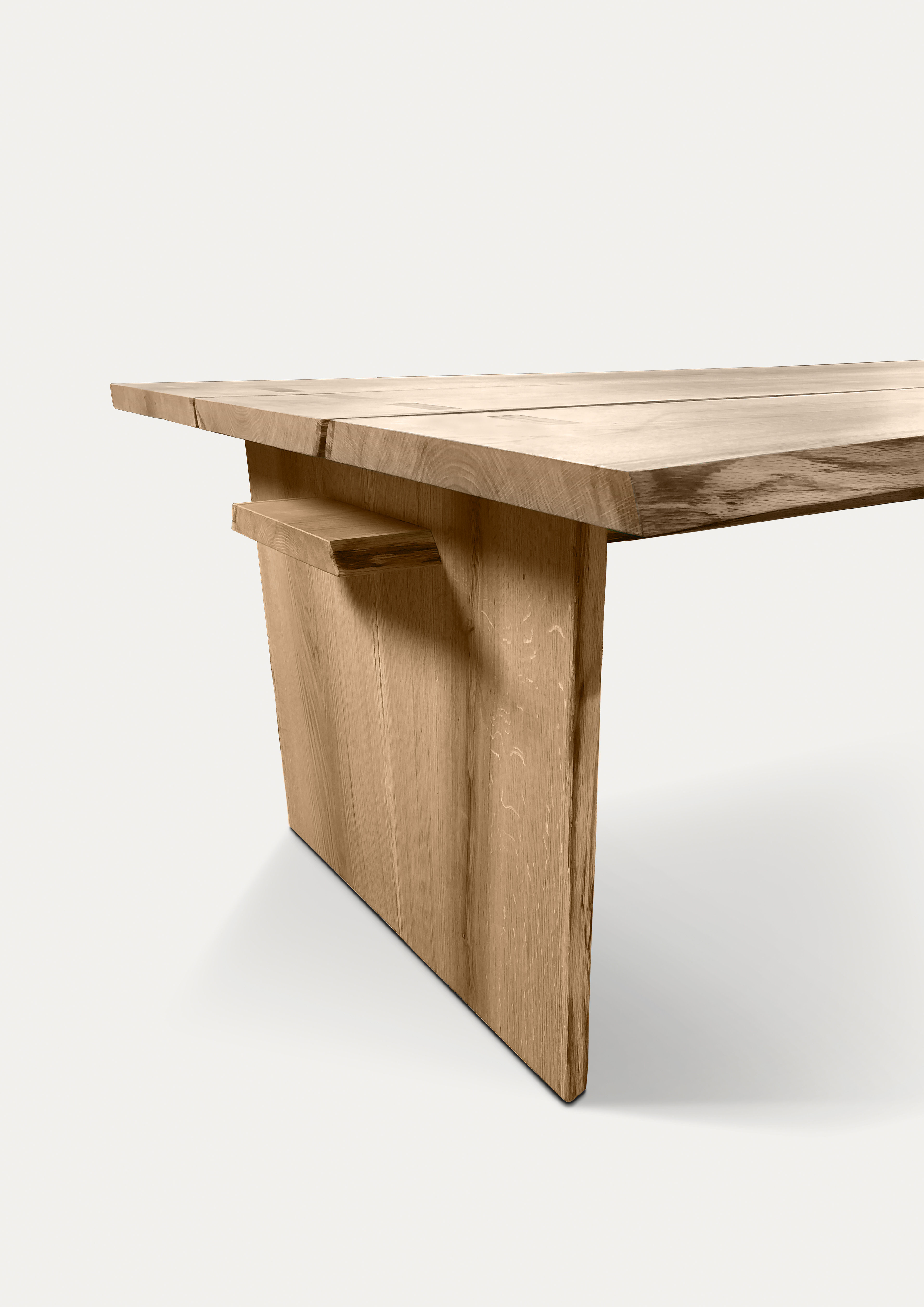
Massive legs act as an anchor for sawn timber forming a working board. The frame is replaced by a single longitudinal joint.
Table as a monolith
The table is made entirely of red oak. We abandoned the adhesive binder for carpentry joints. Thanks to this, our table is free of harmful substances. At the same time, this allows the accumulated material to be used differently, eventually as a fuel.
The monumental character of the table is complemented by a sensual impression. Together with the table, you invite to your house the smell of the forest and the varied texture of red oak timber.
A table that is born in such a different way will also go through the other stages of its life. It will change under the influence of conditions such as humidity or temperature. It may also require more care.
We want it to be a reminder of where the red oak comes from.
Trees are living organisms that need time and the right environment to grow.
Red oak does not come from a sawmill, but U.S. hardwood forests.